
Sustainability at
LG Madeiras
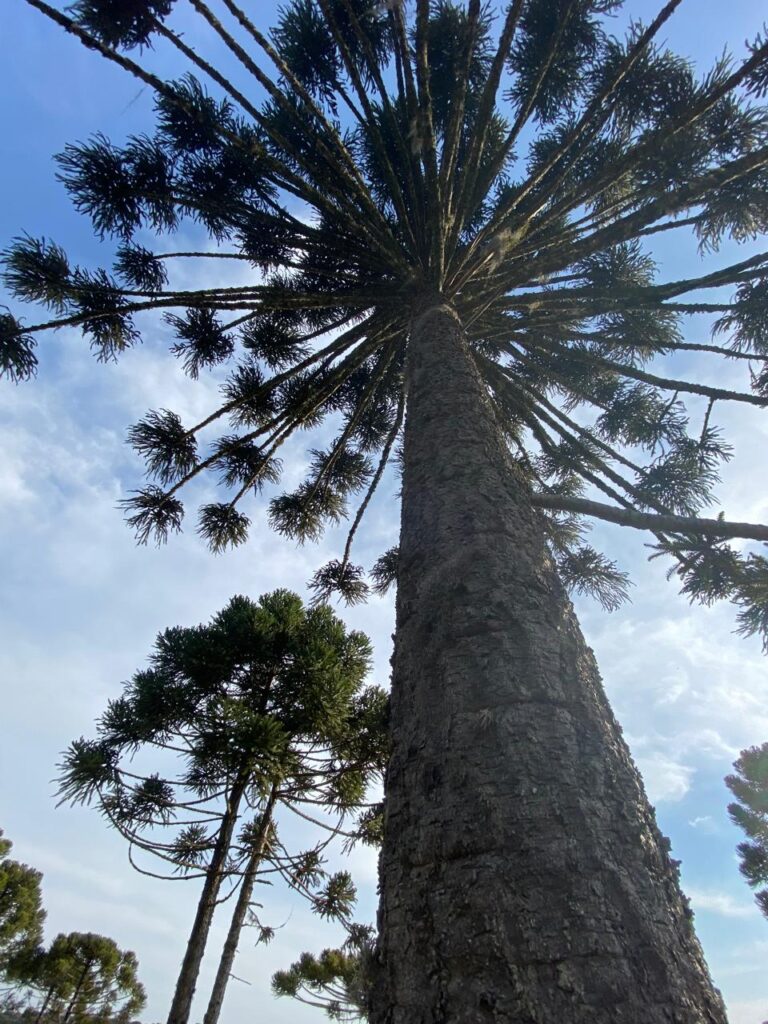
Sustainability Rooted at the Source
Sustainability at LG Madeiras is not a recent initiative — it has been part of the company’s foundation since the very beginning.
The company originated from the planting of Pine and Eucalyptus forests, where its founders were already directly involved in reforestation activities. This practical experience evolved into a business model based on the responsible use of wood resources, combining productivity with environmental preservation.
Since then, LG Madeiras has remained committed to promoting reforestation, supporting landowners and partners with technical guidance on best practices in forest planting and management.
🌳 Sustainable Forestry Cycle
LG Madeiras operates under a continuous forest cycle model:
- Acquisition of reforested areas
- Responsible harvesting of timber
- Replanting of harvested areas
- Development of new productive forests
This process ensures the renewability of natural resources, contributing to the creation of new forest ecosystems and maintaining a balance between production and environmental conservation.
In addition, the company actively supports local communities, generating jobs, income, and regional development in the areas where it operates.
🌍 Certifications and International Compliance
LG Madeiras’ sustainability practices are reinforced by compliance with international standards and regulations:
- FSC® Certification – ensuring responsible forest management
- EUDR Compliance (European Union Deforestation Regulation)
- Kiln-Dried (KD)
- Heat-treated according to the ISPM-15 standard
- Operations aligned with ESG principles
These commitments ensure that LG Madeiras meets the requirements of the most demanding global markets, particularly in Europe and North America.
♻️ Full Utilization – Zero Waste Concept
LG Madeiras follows a zero-waste policy, ensuring the full utilization of raw materials.
All incoming material is efficiently processed:
- High-quality wood → industrial products (sawn timber and plywood)
- By-products → biomass
- Residues → energy generation
This approach significantly reduces waste and converts by-products into clean and renewable energy, reinforcing the company’s commitment to the circular economy.
🚛 Sustainable Logistics
The company also invests in modern sustainable transportation practices.
Its fleet operates using:
- Biodiesel
- ARLA 32 (emission reduction system for nitrogen oxides – NOx)
This combination contributes to the reduction of atmospheric emissions, aligning logistics operations with global green transport and ESG standards.
⚙️ Energy Efficiency and Technology
LG Madeiras continuously invests in modern equipment and efficient industrial processes, focusing on:
- Reducing electricity consumption
- Optimizing production processes
- Increasing operational efficiency
The goal is to produce more with lower environmental impact, while maintaining high-quality standards.
 Commitment to the Future
LG Madeiras believes that sustainable growth is the only path forward.
The company will continue to invest in:
- Reforestation
- Technology
- Efficiency
- People
- Environmental responsibility
Always aiming to build a more balanced and responsible future — from the forest to global markets.
FAQ
What is the EUDR and is LG Madeiras compliant?
The EUDR (EU Regulation 2023/1115) requires that timber sold in the European Union does not originate from land deforested after December 2020, with geographic traceability and due diligence. LG Madeiras is compliant: all wood comes from reforestation areas with documented origin.
What does LG Madeiras' FSC® certification guarantee?
FSC® (Forest Stewardship Council) attests to responsible forest management — environmental, social and economic. Our codes: licence FSC-C215210, chain of custody NEO-COC-215210, forest management NEO-FM/COC-000004, issued by Preferred by Nature.
How does wood traceability work?
Every batch is tracked from planting to delivery: source forest, harvesting, transport, processing and drying. It is an FSC® and EUDR requirement, and standard practice in our integrated chain.
What is the ISPM-15 standard?
An international phytosanitary standard requiring treatment of wood packaging in foreign trade — by heat (HT, 56 °C for 30 minutes at the core). It eliminates quarantine pests. Treated wood receives the IPPC mark.
What does zero-waste production mean?
All material is used: premium wood becomes veneer and sawn timber; residues become wood chips (biomass) for energy. Nothing is discarded.
How does LG Madeiras reduce logistics environmental impact?
Our own fleet runs on biodiesel and ARLA 32 (AdBlue), an additive that cuts nitrogen oxide (NOx) emissions from diesel engines.

