
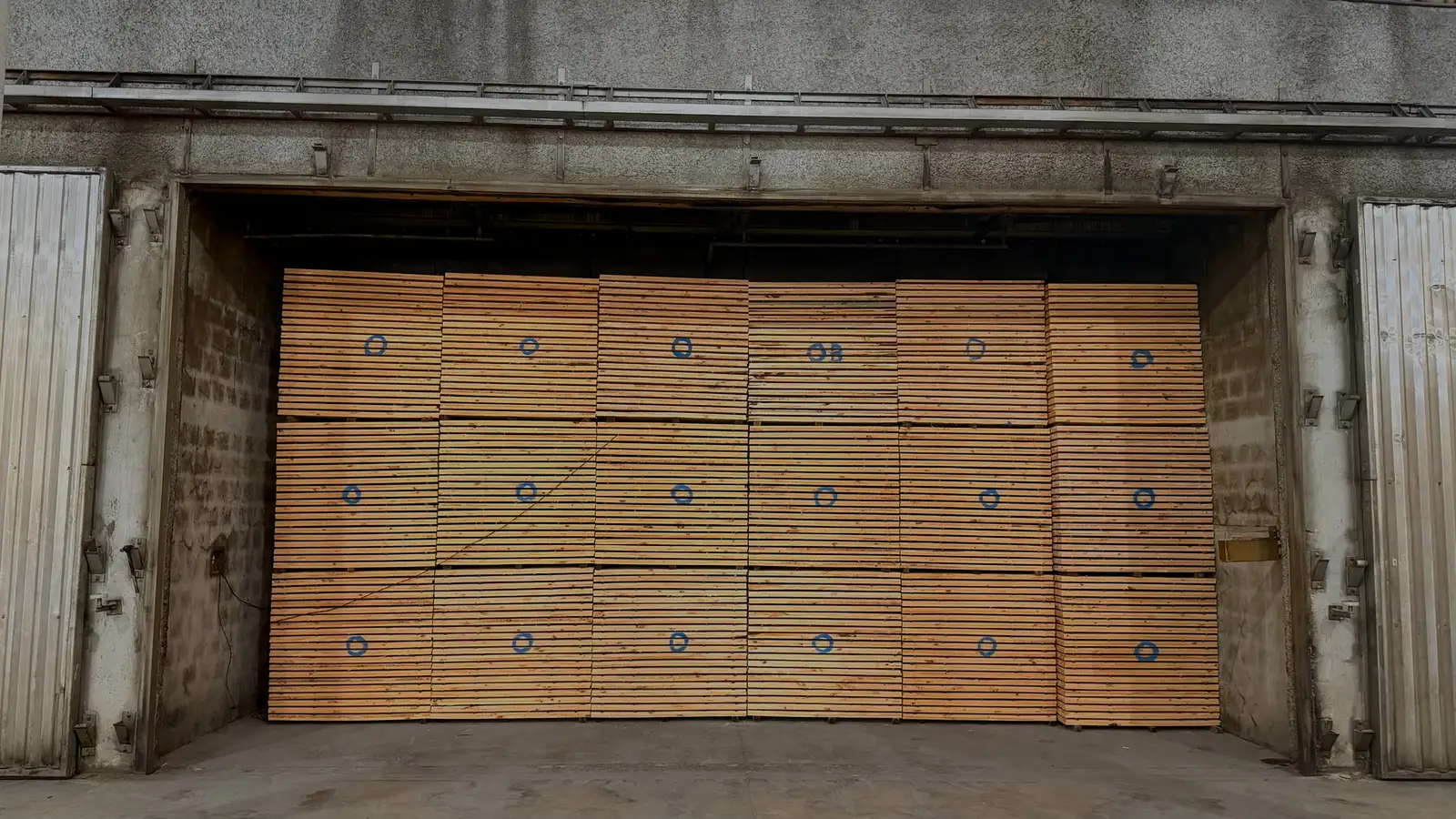
A fumigated pallet is treated with gas, either methyl bromide (code MB) or sulphuryl fluoride (code SF). A heat-treated pallet (code HT) is heated until the core of the wood reaches 56 °C and holds it for 30 continuous minutes. ISPM 15, the international standard for wood packaging, approves all of these, so “fumigated” and “heat treated” are two different routes to the same IPPC mark. They are not equal for the person who has to buy the lumber, store it and stand behind the mark.
What does ISPM 15 approve: fumigation, heat treatment, or both?
ISPM 15 is published by the IPPC (International Plant Protection Convention, part of FAO). It covers pallets, boxes, crates and dunnage made of solid wood in international trade. The wood must be debarked and receive an approved treatment, and the finished item carries the IPPC mark. How to read each field of the mark is in ISPM 15 stamp: how to read the IPPC mark.
Annex 1 of ISPM 15 (revision adopted in 2018) lists four treatments, each with a code in the mark:
| Code | Treatment | What the standard requires |
|---|---|---|
| HT | Heat treatment | 56 °C for 30 continuous minutes throughout the profile of the wood, including the core |
| DH | Dielectric heating | microwave or radio-wave heating to specified parameters |
| MB | Methyl bromide | gas fumigation, at least 24 hours of exposure, wood and air at 10 °C or above, no piece over 20 cm in its smallest dimension |
| SF | Sulphuryl fluoride | gas fumigation over 24 or 48 hours, no piece over 20 cm, moisture content up to 75% (dry basis) |
Annex 2 requires a hyphen between the country code and the producer code (BR-000), and the treatment code goes on a separate line or after another hyphen.
Fumigated or heat-treated pallets: what changes in practice?
Both are valid. What differs is what you have to manage:
| Point | HT (heat) | MB / SF (gas) |
|---|---|---|
| How it works | the core reaches 56 °C for 30 minutes | gas in a sealed chamber for 24 hours or more |
| Bark | may be removed before or after treatment | must be removed before treatment, because bark can reduce efficacy |
| Moisture | the drying kiln can dry and treat in one cycle | MB has no moisture limit in the standard; SF stops at 75% |
| Thick pieces | the core must reach 56 °C, so the schedule has to fit the thickness | MB and SF do not apply to pieces over 20 cm |
| Residue | no gas | residual gas: ask the fumigator about aeration time |
On cost, the drivers are energy and temperature records for heat, and a sealed chamber, certified applicators and waiting time before release for gas. Ask for a quote on both with the same volume and dimensions to compare.
In Brazil, the national rule is Portaria MAPA 514/2022. It lists the four codes (art. 13) and says methyl bromide fumigation must take place in an area under customs control served by a Vigiagro unit (art. 11). That is a logistics difference that heat treatment in a kiln does not have.
Which markets restrict methyl bromide?
Methyl bromide depletes the ozone layer. The Montreal Protocol put it under phase-out in 1992 (Copenhagen Amendment), but quarantine and pre-shipment (QPS) use stays exempt. The Ozone Secretariat’s report to the IPPC (CPM 2023/INF/08) puts QPS use at about 10,000 tonnes a year and says alternatives exist for 30% to 40% of it, citing the 2022 MBTOC assessment.
ISPM 15 itself keeps MB because not every country has alternatives, but it tells national plant protection organizations to promote the other treatments and to consider the 2008 IPPC recommendation on replacing or reducing its use. In the United States, USDA APHIS states that the American Lumber Standard Committee (ALSC) administers both the heat treatment and the methyl bromide programs.
There is no up-to-date official list of countries that refuse MB-marked packaging that we could confirm, so this article does not give one. Ask the importer, and confirm the requirement with the plant protection authority of the destination before shipping.
What should a pallet maker require from a lumber supplier?
- Treated and documented lumber. For HT, ask where the wood was treated, in which kiln, and which record travels with each load.
- Moisture at delivery. Dry wood that gets wet in a yard goes back up in moisture, and ISPM 15 does not protect against mould. Below about 20%, fungus has no conditions to grow. See kiln-dried and heat-treated lumber for pallets.
- Debarked wood. The standard tolerates bark pieces under 3 cm wide, or wider pieces with each under 50 cm² (ISPM 15, Annex 1).
- A grade that fits your line. Knots, blue stain and wane (the rounded edge left by the log) decide what the pallet can carry. See pine lumber grades explained.
- Stable dimensions, cut to your line. Machine-built pallets do not tolerate boards outside tolerance.
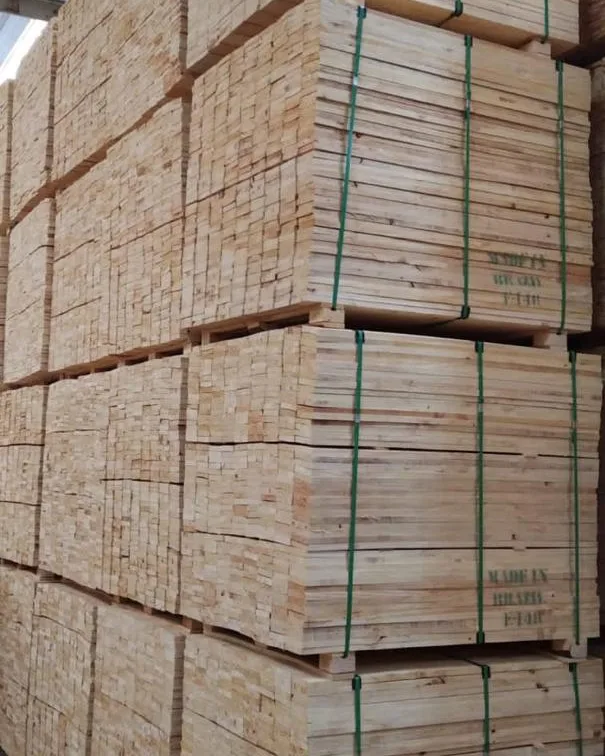
What does the pallet maker have to do on its own?
Buying treated lumber does not replace the rules for whoever builds and marks the pallet. Under ISPM 15, treatment and marking are always under the authority of the national plant protection organization, and treatment should happen before the mark is applied (section 4.1). In Brazil, Portaria 514/2022 says the mark is applied by a registered company, an accredited service provider, or the manufacturer when authorized (art. 14). Marking before treatment is an exception, audited, and limited to forced-air heat and kiln treatment in a fixed unit (art. 16).
If a pallet maker intends to mark its own product, that conversation is with the national authority, not with the lumber supplier. Whoever builds the finished pallet answers for the mark on it.
What are the most common mistakes?
- Treating the wood and then letting it get wet. Heat kills pests, not fungus. Store treated wood under cover.
- Mixing treated and untreated wood when building or repairing. Under ISPM 15 only treated wood goes into a repair, and each new piece is marked on its own. Past about one third of the components replaced, the pallet is remanufactured: erase the old mark, treat again, mark again.
- Marking before treating. Section 4.1 says treat first, so that no pallet carries a mark without treatment.
- Missing hyphen in the mark. Annex 2 requires it (BR-000), and the US enforcement of the hyphen returned on 1 January 2026, as explained in the stamp article.
- Accepting “fumigated” without reading the code. What counts is HT, DH, MB or SF in the mark, with the producer number.
- Ordering fumigated pallets without knowing the destination. If the importer only accepts HT, MB becomes a loss.
Checklist for buying treated lumber or pallets
- The treatment code in the mark (HT, DH, MB or SF) is accepted by the importer.
- The hyphen between country and producer code is present.
- Treatment was done by an authorized or registered provider.
- A treatment record exists for each load (kiln, cycle, date).
- Wood is debarked, within the bark tolerance.
- Moisture at delivery is below about 20% and the wood arrives covered.
- No untreated boards are mixed into the pallet.
- For MB and SF: pieces up to 20 cm; for SF, moisture up to 75%.
- You have confirmed the destination country’s rule with the importer.
How LG Madeiras does it
LG heat-treats its sawn pine in its own kilns, to the HT standard, since 2017. Each cycle is controlled and recorded by the Marrari EcoPower MR500 system. The lumber leaves the kiln at 5% to 12% moisture.
LG supplies kiln-dried, heat-treated (HT) sawn pine lumber. If you make export pallets and want HT lumber, see sawn pine lumber and send the specification of your line (species, grade, tolerance and volume) to get a quote. More on shipping in export.
Sources: ISPM 15, Regulation of wood packaging material in international trade (IPPC/FAO, adopted 2018; Annexes 1 and 2, sections 4.1 and 4.3); Portaria MAPA no. 514 of 8 November 2022, arts. 5, 6, 11, 12, 13, 14 and 16; Wood Packaging Material, treatment programs (USDA APHIS); Report by the Ozone Secretariat, CPM 2023/INF/08 (UNEP Ozone Secretariat, CPM-17, 2023), citing the 2022 MBTOC Quadrennial Assessment and Montreal Protocol Decision XXXIV/10 (2023). Information checked in November 2026.